The Myth of Just War in Iran
Just War or Just Interest? Assessing the Moral Claims Behind a Potential U.S.–Israel War Against…
Opini Sipil
Just War or Just Interest? Assessing the Moral Claims Behind a Potential U.S.–Israel War Against Iran
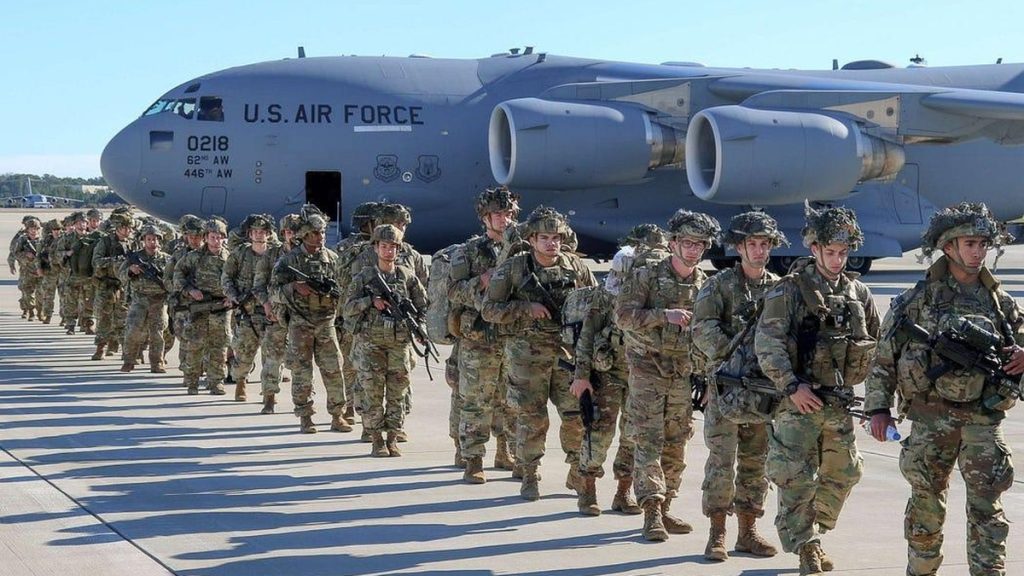
A recurring narrative in every escalation involving the United States, Israel, and Iran frames the conflict as a normative mission to defend democracy, uphold secularism, and safeguard regional stability against authoritarian threats. Within the framework of just war theory, particularly the concept of jus ad bellum, war is morally permissible only when certain stringent conditions are met. The central principle of jus ad bellum is just cause, meaning that war must be waged in self defence, to protect innocent lives, or to prevent a grave and imminent threat.
The critical question, therefore, is whether a conflict or potential war against Iran can genuinely be classified as a just war pursued in the name of democracy and secularism.
Normatively, the claim of promoting democracy appears laudable. Yet historical consistency provides the first test of such a claim. In 1953, through a covert CIA and MI6 operation known as Operation Ajax, the United States orchestrated the overthrow of Iran’s democratically elected prime minister, Mohammad Mosaddegh. Mosaddegh was a secular leader who nationalised Iran’s oil industry, a policy perceived as threatening Western economic interests. The coup paved the way for the authoritarian rule of Shah Mohammad Reza Pahlavi, which endured until the 1979 Iranian Revolution.
If democracy and secularism were truly foundational principles of U.S. foreign policy, the intervention against Mosaddegh presents a striking contradiction. This episode suggests that strategic and economic interests, particularly energy security and regional stability, have often taken precedence over normative commitments to democratic governance. In other words, the rhetoric of democracy has not always aligned with geopolitical practice.
Within the jus ad bellum framework, just cause demands a high moral threshold. Self defence against a direct attack clearly qualifies. However, preventive war justified on ideological grounds, such as spreading democracy or enforcing secularism, is far more ethically problematic. Democracy cannot be imposed through bombardment. The experience of military intervention in Iraq in 2003 illustrates how claims of democratisation can instead produce prolonged instability. If war is waged under the banner of regime change, its moral legitimacy weakens considerably, particularly as it risks violating principles of sovereignty and self determination.
Moreover, the moral legitimacy of war does not rest solely on governmental assertions but also on broader societal recognition of the justice of the cause. Here, the issue becomes more complex. Recent Gallup World Affairs survey data indicate a significant shift in American public opinion. In 2026, public sympathy in the United States for Palestinians reached 41%, while sympathy for Israelis declined to 36%. This marks the first time in two decades that sympathy for Palestinians has surpassed that for Israelis. In the early 2000s, sympathy for Israel consistently ranged between 50% and 60%, while sympathy for Palestinians remained in the low teens.
This development is not a minor fluctuation but rather a structural shift in moral perception among the American public. If military action were genuinely grounded in the protection of innocent lives, such legitimacy would presumably be reflected in domestic support. Yet when public sympathy increasingly aligns with Palestinians, who are widely perceived as more vulnerable in humanitarian terms, the narrative of just cause becomes more tenuous. The perception that emerges is that war is not primarily understood as a humanitarian safeguard but as part of a broader geopolitical struggle.
From a strategic perspective, Iran occupies a pivotal position in the Persian Gulf and along key global energy routes. Regional stability, the security of allied states, and broader geopolitical calculations involving major powers such as China and Russia are arguably more compelling explanations for policy choices than an ideological project of democratisation. Israel, for its part, views Iran as an existential threat, particularly due to Tehran’s support for groups such as Hezbollah and Hamas. This outlook is grounded in security and regional power considerations rather than a doctrinal commitment to secularism.
At this juncture, the fundamental question arises: is such a war best understood as a just war, or as a war driven by interest? From a normative standpoint, it is difficult to conclude that a war against Iran, framed as an effort to promote democracy and secularism, fully satisfies the requirements of jus ad bellum. The principle of just cause cannot rely on rhetoric alone, particularly when historical precedent and shifting domestic opinion suggest a crisis of moral legitimacy.
Ultimately, the morality of war is not determined by the language used to justify it but by the consistency of actions, the credibility of motives, and the consequences for civilian populations. When stated objectives diverge from historical practice and public perception, claims of moral legitimacy become increasingly fragile. In this context, democracy appears less as a foundational principle and more as a language of justification.
Baca juga
- “Prabowo Menjawab” dan Ujian Serius Industrialisasi di Tengah Ancaman Stabilitas Politik
- War of Narration in Indonesia on the US-Iran Conflict
- Denial at the Top: Prabowo’s Rhetoric Is Making Indonesia’s Economic Crisis Worse
Tulisan ini adalah opini (Opini Sipil) dari mitra junior kami; teks dari dokumen penulis, gambar dari dokumen penulis.