Denial at the Top: Prabowo’s Rhetoric Is Making Indonesia’s Economic Crisis Worse
The rupiah was trading at around Rp17,800 per US dollar, its weakest in decades (Mulawakkan, 2026). Inflationary pressures were building. Investors were bailing out. And the President, through all…
Opini Sipil
Baca juga
- Ketika Kritikus Masuk Istana: Ujian bagi Perbedaan Pendapat
- War of Narration in Indonesia on the US-Iran Conflict
- “Prabowo Menjawab” dan Ujian Serius Industrialisasi di Tengah Ancaman Stabilitas Politik
Source: The Strait Times
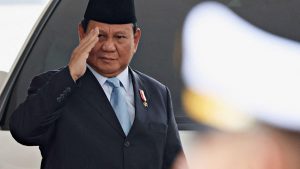
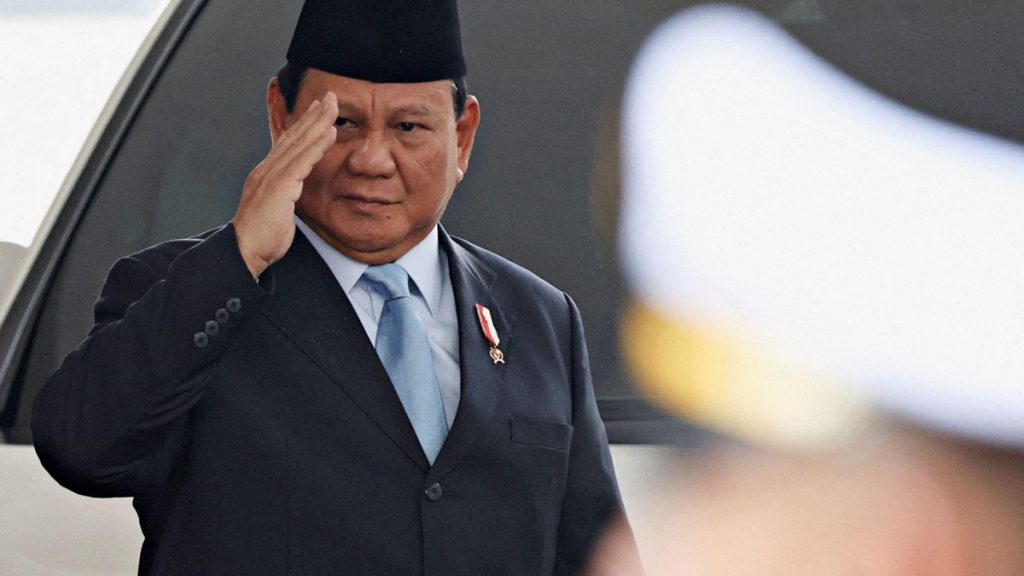
President Prabowo Subianto addresses a crowd during the inauguration of a cooperative in Nganjuk, East Java, May 16, 2026. It was a ceremonial moment- speeches, applause, the usual fanfare. But outside the hall, Indonesia’s economy was quietly hemorrhaging.
The rupiah was trading at around Rp17,800 per US dollar, its weakest in decades (Mulawakkan, 2026). Inflationary pressures were building. Investors were bailing out. And the President, through all this, gave the crowd two things: an offhand dismissal and a shrug shrouded in optimism. “Mau dolar berapa ribu kek, kan kalian di desa-desa nggak pakai dolar”, “Whatever the dollar rises to, you guys in the villages don’t use dollars, right?” (Detik Finance, 2026b).
This is not a simple question . Is this a leader trying to soothe a nervous nation or a leader who has confused the map with the territory, confusing the lack of dollar bills in a farmer’s pocket with the lack of dollar-driven consequences in a farmer’s life?
But before we can parse the rhetoric, it’s worth establishing what’s actually going on because the facts aren’t in dispute.
As of May 2026, Indonesia’s foreign exchange reserves had dropped to $144.89 billion from $156.47 billion in December 2025 suggesting that Bank Indonesia had spent around $11.58 billion to intervene in the currency market in only five months or $2.31 billion a month on average (Saham Daily, 2026). It is not a strength to have this continual drain on reserves. It is the price of supporting a currency under continuous attack.
Analysts, however, have argued that the main problem is not the shadow of 1998, but the erosion of fiscal credibility, the cost of which is paid directly through the exchange rate (Kompas.id, 2026). Put simply, the rupiah’s fall is not just random noise. It shows markets are doubtful about the policy trajectory and governance credibility of Indonesia.
Structural reasons for rupiah’s pressure in 2026 differ from the 1998 crisis. The crucial question is not only if rupiah depreciated but if Indonesia can maintain credibility of its policy amidst persistent external and domestic pressure (Nababan, 2026). The banking system today may be more resilient. But institutional resilience does not make up for the lack of credible, empathetic leadership communication.
This isn’t a perception problem. It is a crisis that demands honest, grounded communication from those in power.
“People in the villages don’t use dollars.”
This is technically correct, on the face of it. A rice farmer in Nganjuk does not deal in US dollars. But this framing, intentional or sloppy, elides an important distinction: the difference between using a currency and being impacted by one.
Farmers in villages may not buy things in dollars, as one commentator pointed out, but the price of their fertilizer is dictated by global commodity imports. Fuel prices are the result of world oil geopolitics. The exchange rate of the dollar is pushing up the cost of animal feed, medicines and logistics. The rise in the price of rice in local markets is often a domino effect of global economics that is invisible to the naked eye (Kompas Nasional, 2026).
An economist of Universitas Muhammadiyah Makassar simply put it, “If the discussion is limited to the level of daily transactions, then we are missing the bigger picture of how the economic system actually works” (Mulawakkan, 2026). In short, the declaration is not only economically inaccurate. And politically it is convenient to put a false boundary between currency markets and village economies that does not exist in practice.
The Contradiction of Istana Cleanup
The next part was educational in a way.
Two days after Prabowo’s comments, Finance Minister Purbaya Yudhi Sadewa said that the President had meant “to comfort the people” and that Prabowo understood the dollar issue well and was speaking in context and not literally (Detik Finance, 2026a).
“The speech was ‘cut’ to a single sentence, and it was unfairly framed,” insisted Gerindra spokesperson Bahtra Banong. He said if the speech was heard in full, Prabowo was telling the public not to panic because Indonesia’s economic fundamentals remain strong (Detik News, 2026).
Two explanations in the same political camp. It was meant for comfort, one says The other says it was a misunderstanding. Neither say it was incorrect.
This isn’t crisis communications. That’s a crisis containment. There’s a significant difference between the two. The first one deals with the problem. The latter concerns the optics of the problem.
It is easy to dismiss this as a one-off gaffe. It is not.
The viral hashtag #KaburAjaDulu (“Just Leave”) was created to vent frustration over economic conditions, and the Deputy Minister of Manpower said: “If you want to leave, go ahead. If you don’t want to come back, that’s OK too.” When #IndonesiaGelap (“Indonesia Is Dark”) trained as a protest movement, Luhut Binsar Pandjaitan responded: “If someone says Indonesia is dark you’re the one who’s dark, not Indonesia” (The Conversation Indonesia, 2025).
Crisis communication theory argues that strategies to reduce public panic and restore trust should be adopted by governments. But the pattern seen in Indonesia is of an elitist, non-empathetic and consistently defensive response to public criticism which tends to generate wider backlash rather than calm (The Conversation Indonesia, 2025).
A year into the Prabowo administration, LAB45 found that public communication from government officials continued to create controversy by responding without empathy at times of social crisis. The research showed a tendency to respond to public issues from an elite perspective, which was further hampered by the lack of a trained and well-coordinated communications team (Tempo, 2025).
Citra Institute political analyst Yusak Farchan warned that if this kind of pattern continues to repeat itself it will damage Prabowo’s credibility as president. He noted that the failure of the Presidential Communications Office to translate policy into public understanding is being compounded, not corrected, by the off-script remarks of cabinet members (Suara.com, 2025).
The message in incidents is the same again and again: your anxiety is the problem, not what you are anxious about.
The bigger issue here is not about a single speech in Nganjuk. It is about what happens when a government becomes more interested in managing perception than in managing reality.
“The use of blunt and dismissive language by public officials is not just a matter of style,” said Firman Kurniawan, a political communication scholar at Universitas Indonesia. “It’s part of a larger pattern of how the state relates to society, which could widen the gap between the government and the people it rules” (VOA Indonesia, 2025).
That gap between what the government says and what the public experiences continues to grow, and it undermines trust. And when an economic crisis breaks trust, the crisis worsens. Markets gauge public confidence. Investors look for institutional credibility. Neither is comforted by a president who answers a currency in freefall with the word “mercy.”
A good leader doesn’t have to have all the answers in a crisis. But they have to prove that they know what the question is.
Telling villagers that they don’t use dollars is the political equivalent of telling someone whose house is flooding that they need not worry, because they are not swimming. The water doesn’t care if you engage with it on its own terms. It rises anyways.
To call a depreciating currency a “blessing” is not optimism. It is the rhetorical substitution of hope for accountability.
Indonesia does not need its president to deny the existence of the crisis. It demands governance worthy of the term ‘karunia’ not one that uses it as a fig leaf to cover up an inconvenient reality.
Because at Rp18,000 to the dollar, the truth is bad enough.
References
Detik Finance. (2026a, May 18). Purbaya jelaskan maksud Prabowo sebut ‘orang desa tidak pakai dolar.’ https://finance.detik.com/bursa-dan-valas/d-8493812/purbaya-jelaskan-maksud-prabowo-sebut-orang-desa-tidak-pakai-dolar
Detik News. (2026b, May 18). Gerindra jelaskan maksud Prabowo bilang ‘orang desa tidak pakai dolar.’ https://news.detik.com/berita/d-8493584/gerindra-jelaskan-maksud-prabowo-bilang-orang-desa-tidak-pakai-dolar
Kompas Nasional. (2026, May 17). Orang desa tidak pakai dolar dan retorika populis Prabowo. https://nasional.kompas.com/read/2026/05/17/13000031/orang-desa-tidak-pakai-dolar-dan-retorika-populis-prabowo
Kompas.id. (2026, May 4). Rupiah, risk, and memories of 1998. https://www.kompas.id/artikel/en-rupiah-resiko-dan-ingatan-1998
Mulawakkan, A. (2026, June 2). Rupiah Rp17.800-an, Prabowo bilang “orang desa tak pakai dolar”: Dampaknya tetap sampai ke desa. Universitas Muhammadiyah Makassar News. https://news.unismuh.ac.id/2026/06/02/rupiah-rp17-800-an-prabowo-bilang-orang-desa-tak-pakai-dolar-peneliti-pendidikan-matematika-dampaknya-tetap-sampai-ke-desa/
Nababan, M. (2026). Re-assessing economic resilience: Mengapa volatilitas rupiah dan IHSG 2026 bukan pengulangan krisis 1998. https://martinnababan.com/re-assessing-economic-resilience-mengapa-volatilitas-rupiah-dan-ihsg-2026-bukan-pengulangan-krisis-1998/
Saham Daily. (2026, June). Krisis moneter jika rupiah melemah ke level 32.300? https://www.sahamdaily.com/krisis-moneter-jika-rupiah-melemah-ke-level-32-300/
Suara.com. (2025, February 21). Dari “Ndasmu” ke “Kau yang Gelap”: Mengapa gaya komunikasi pemerintahan Prabowo Subianto berbahaya? https://liks.suara.com/read/2025/02/21/080000/dari-ndasmu-ke-kau-yang-gelap-mengapa-gaya-komunikasi-pemerintahan-prabowo-subianto-berbahaya
Suara.com. (2026, May 19). Mengapa rupiah melemah bikin warga desa ikut susah? Menepis logika ‘orang desa tak pakai dolar.’ https://amp.suara.com/news/2026/05/19/193104/mengapa-rupiah-melemah-bikin-warga-desa-ikut-susah-menepis-logika-orang-desa-tak-pakai-dolar
Tempo. (2025, October 22). Setahun pemerintahan Prabowo, LAB45: Komunikasi publik pemerintah sering blunder. https://www.tempo.co/politik/setahun-pemerintahan-prabowo-lab45-komunikasi-publik-pemerintah-sering-blunder-2082220
The Conversation Indonesia. (2025, March 11). Kegagalan komunikasi pemerintah: Rakyat butuh dialog empatik, bukan represi elitis. https://theconversation.com/kegagalan-komunikasi-pemerintah-rakyat-butuh-dialog-empatik-bukan-represi-elitis-250655
Tribunnews. (2026, May 18). Prabowo bilang orang desa tak main saham, tak pakai dolar, pakar: Maaf, Presiden tak paham ekonomi. https://www.tribunnews.com/nasional/7831235/prabowo-bilang-orang-desa-tak-main-saham-tak-pakai-dolar-pakar-maaf-presiden-tak-paham-ekonomi
VOA Indonesia. (2025, February 26). “Ndasmu” dan “Kau yang Gelap,” indikasi kemunduran komunikasi politik? https://www.voaindonesia.com/a/ndasmu-dan-kau-yang-gelap-indikasi-kemunduran-komunikasi-politik-/7988355.html
Tulisan ini adalah opini (Opini Sipil) dari mitra junior kami; teks dari dokumen penulis, gambar dari dokumen penulis.